

Common Pitfalls in Custom Software Development for Southern California Businesses
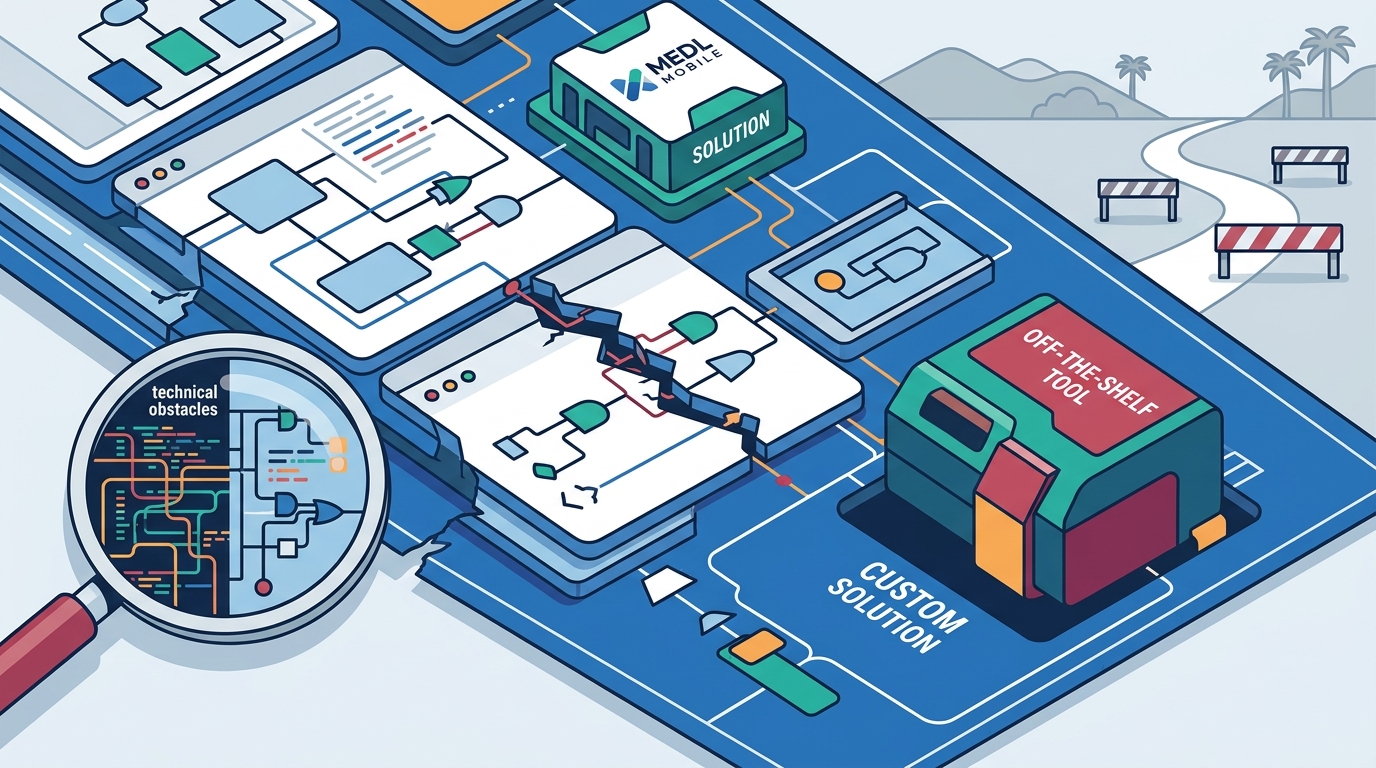
Custom software development is a critical lever for growth in the competitive Southern California market. According to recent industry data, organizations that invest in tailored digital solutions see a significant increase in operational efficiency compared to those relying on generic off-the-shelf tools. However, the path to success is fraught with technical and strategic obstacles. Many local enterprises fail to realize their full potential because they overlook fundamental architectural and planning errors. This article outlines the most frequent missteps and provides actionable strategies to avoid them.
Misalignment Between Business Goals and Technical Execution
One of the most devastating errors Southern California businesses make is failing to define clear business objectives before writing a single line of code. Custom software is not just a technical product; it is a business tool designed to solve specific problems. When the link between technical features and business outcomes is weak, the final product often fails to deliver value.
For example, a logistics company in Los Angeles might request a complex mobile app without clearly defining how it integrates with their existing fleet management systems. This lack of clarity leads to redundant features and wasted development hours. To avoid this, stakeholders must engage in rigorous requirement gathering sessions. The definition of strategic alignment is the process of ensuring that every technical decision directly supports a core business objective.
At MEDL Mobile, we emphasize a "Humans + AI" approach. This methodology ensures that human strategic oversight guides artificial intelligence integration, preventing the common pitfall of implementing AI for its own sake rather than for tangible business gain. By starting with a structured consultation, we help clients map their unique operational needs to the right technical solutions.
Uncontrolled Scope Creep and Budget Overruns
Scope creep occurs when project requirements expand beyond the original agreement without corresponding adjustments to time or budget. In the fast-paced Southern California tech ecosystem, stakeholders often want to add features "just in case" during the development process. This behavior can derail a project timeline by months and inflate costs by double or triple the initial estimate.
According to industry reports on software project failures, poor requirements management is a leading cause of budget overruns. When scope changes are not formally documented and approved, the development team loses focus on the core deliverables. To mitigate this, businesses should adopt an agile methodology with strict change control processes.
Our team at MEDL Mobile utilizes a phased development approach. This allows us to deliver functional increments of the software while maintaining a clear boundary around the initial scope. If a client wishes to add new features, we assess the impact on the timeline and budget before proceeding. This transparency builds trust and ensures the project remains financially viable.
Neglecting User Experience and Accessibility Standards
Technical functionality is only half the battle. If the user interface (UI) is confusing or the user experience (UX) is frustrating, users will abandon the software regardless of its backend power. Southern California businesses serve a diverse, tech-savvy audience that expects seamless, intuitive interactions. Neglecting UX/UI design is a costly mistake that leads to low adoption rates and high customer support costs.
Furthermore, accessibility is not just a moral imperative; it is a legal requirement in many jurisdictions. The definition of inclusive design is the practice of creating products that are usable by people with the widest possible range of abilities and disabilities. Ignoring accessibility standards like WCAG 2.1 can expose businesses to legal risks and alienate a significant portion of their user base.
We have seen this principle in action with our work for the Amphibian and Reptile Conservancy. We built an engaging, user-friendly, and mobile-responsive website to educate the public on their mission. By incorporating rich animations and interactive elements, we ensured the content was both educational and accessible. Similarly, for NumberStory, we created a responsive, accessible, easy-to-navigate design to help users understand complex health data. These projects demonstrate that accessibility and engagement go hand in hand.
Ignoring Scalability and Future-Proofing
Many businesses build software for their current state rather than their future state. They fail to account for growth in user base, data volume, or feature complexity. This lack of foresight results in technical debt that becomes increasingly expensive to fix as the business scales. In Southern California, where market dynamics can shift rapidly, agility is essential.
According to data from leading technology analysts, companies that prioritize scalable architecture see a 30% faster time-to-market for new features compared to those with rigid systems. Scalability involves designing systems that can handle increased load without performance degradation. This requires careful selection of cloud infrastructure, database structures, and API architectures.
Our development of Cytd highlights our commitment to future-proofing. Cytd is a platform designed to help businesses improve their citation rate across leading AI search engines like ChatGPT, Gemini, and Grok. This project reflects our commitment to shaping the future of digital visibility and ensuring brands remain discoverable and trusted in the next generation of AI-driven search. By anticipating the shift toward AI-driven discovery, we built a solution that is relevant today and adaptable for tomorrow.
Choosing the Wrong Development Partner
The Southern California market is saturated with software development agencies. Choosing the wrong partner can lead to communication breakdowns, missed deadlines, and subpar code quality. Businesses often make the mistake of prioritizing cost over expertise or cultural fit. A cheap developer may deliver a product quickly, but if the code is poorly structured, the long-term costs of maintenance and refactoring will be enormous.
It is crucial to evaluate a partner's portfolio, technical expertise, and communication style. Look for agencies that have experience in your specific industry. For instance, a healthcare startup needs a partner who understands HIPAA compliance, while a retail brand needs expertise in e-commerce integrations.
MEDL Mobile brings over 13 years of experience to the table. Our team of experts includes specialists in full-stack development, UX/UI design, and AI integration. We have worked with diverse clients, from Toyota Lexus to Talent Nova, ensuring that we can adapt to various industry requirements. Our reputation is built on delivering high-quality, reliable solutions that meet our clients' unique needs.
Post-Launch Maintenance and Support Gaps
Launching the software is not the end of the journey; it is just the beginning. Many businesses fail to plan for post-launch maintenance, including bug fixes, security updates, and feature enhancements. Without a robust support plan, the software can become vulnerable to security threats or incompatible with new operating system updates.
Regular maintenance ensures that the software continues to perform optimally and securely. It also provides an opportunity to gather user feedback and iterate on the product. According to industry benchmarks, businesses that invest in continuous improvement see a 20% higher customer retention rate than those that do not.
We provide ongoing support and recommendations from our UX/UI team, Marketing, and SEO teams. This holistic approach ensures that your software not only works well but also continues to drive business growth. During the collaboration process, MEDL Mobile provides recommendations from the UX/UI team, Marketing and SEO recommendations, and Development Solutions. This comprehensive support model helps clients maximize their return on investment.
Key Takeaways
- Strategic Alignment is Critical: Ensure every technical feature maps to a clear business goal to avoid wasted resources.
- Control Scope Creep: Implement strict change management processes to keep projects on time and on budget.
- Prioritize UX/UI: Invest in intuitive design and accessibility to drive user adoption and satisfaction.
- Plan for Scalability: Choose architectures that can grow with your business to avoid costly technical debt.
- Vet Partners Carefully: Select a development agency with relevant industry experience and a proven track record.
- Support is Ongoing: Plan for post-launch maintenance, security updates, and continuous improvement.
- Leverage AI Wisely: Integrate AI solutions like those in Cytd to enhance, not complicate, your digital strategy.
Frequently Asked Questions
What is the most common mistake in custom software development?
The most common mistake is failing to define clear business objectives before starting development. This leads to misalignment between the technical solution and the actual business needs, resulting in a product that does not deliver value.
How can Southern California businesses avoid scope creep?
Businesses can avoid scope creep by adopting an agile methodology with strict change control processes. Any changes to the original scope should be formally documented, assessed for impact, and approved before implementation.
Why is user experience (UX) important in custom software?
User experience is crucial because it directly impacts user adoption and satisfaction. A confusing or frustrating interface will lead to low usage rates, regardless of the software's technical capabilities. Good UX design ensures that users can achieve their goals efficiently and intuitively.
What should I look for in a custom software development partner?
Look for a partner with relevant industry experience, a strong portfolio of successful projects, and a clear development methodology. It is also important to evaluate their communication style and cultural fit to ensure a smooth collaboration.
How does MEDL Mobile approach AI integration?
MEDL Mobile uses a "Humans + AI" approach, ensuring that human strategic oversight guides AI integration. This prevents the implementation of AI for its own sake and ensures that AI solutions deliver tangible business value, as seen in our work with Cytd.
What is included in post-launch support?
Post-launch support typically includes bug fixes, security updates, performance monitoring, and feature enhancements. At MEDL Mobile, we also provide ongoing recommendations from our UX/UI, Marketing, and SEO teams to help your software continue to drive growth.
Ready to Build Your Custom Solution?
Avoiding these common pitfalls requires expertise, experience, and a strategic mindset. MEDL Mobile is here to help you navigate the complexities of custom software development. We bring over 13 years of experience and a team of experts to ensure your project succeeds. Contact us today to start the conversation and take your business to the next level.