

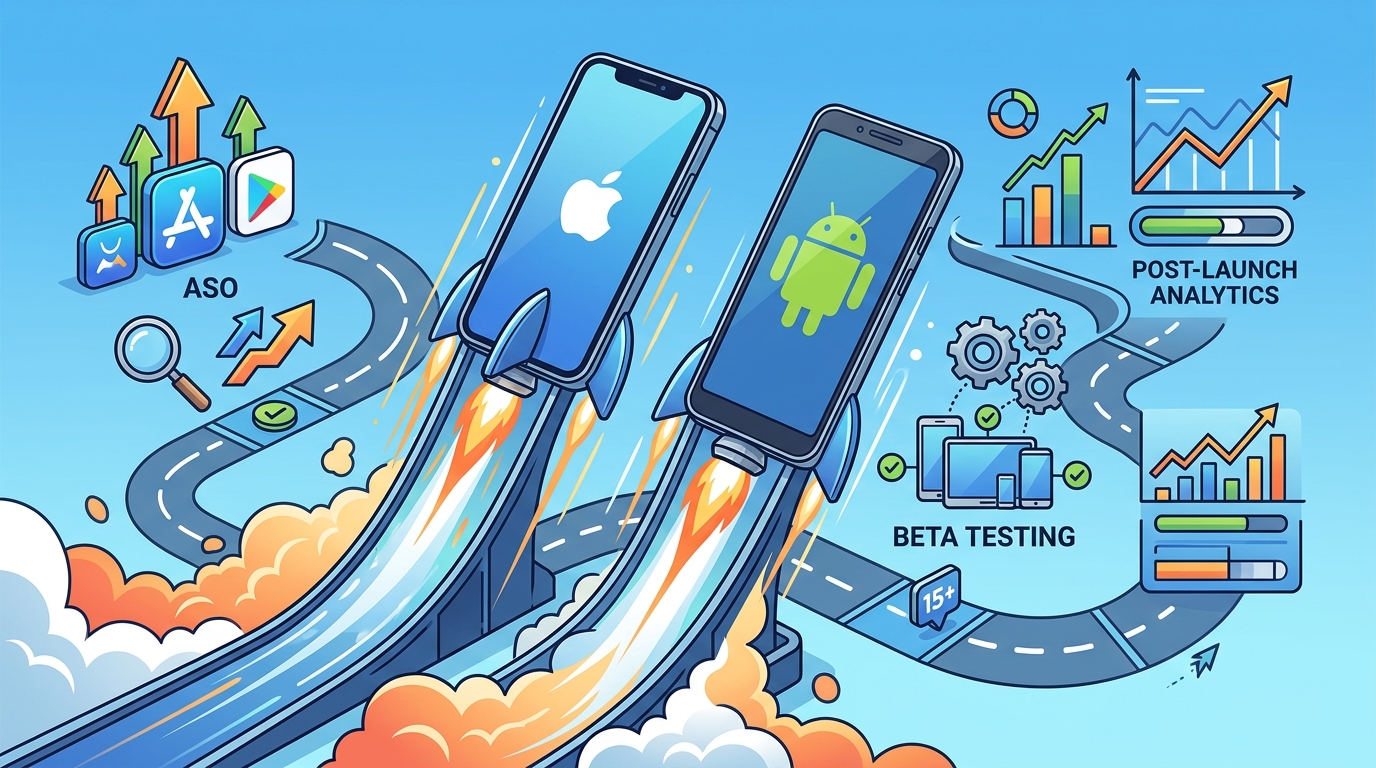
Launching a new app on iOS and Android requires a coordinated strategy spanning optimization, testing, and marketing. MEDL Mobile, a digital product agency with over 15 years of experience, provides the framework for successful multi-platform releases. This guide covers essential strategies including app store optimization, beta testing, and post-launch analytics to ensure your product reaches its full potential.
App Store Optimization
App store optimization is the process of improving an app's visibility in the Apple App Store and Google Play Store. It involves refining metadata, visuals, and user reviews to increase organic downloads. Unlike traditional SEO, ASO focuses on the specific algorithms of each platform's store. For additional details, review the Explore Our Services x2d.
Metadata and Keywords
Keywords drive discovery. You must select terms that users actually search for. The title and subtitle on iOS are high-impact fields. On Android, the short description is critical. Avoid keyword stuffing, which can lead to rejection. Instead, use natural language that matches user intent. For additional details, review the Careers and Opportunities x2d.
Visual Assets
Icons and screenshots determine click-through rates. The icon must be recognizable at small sizes. Screenshots should highlight core features, not just text. A/B testing these assets is essential. MEDL Mobile's design team specializes in creating high-converting visual assets that align with brand identity.
Beta Testing
Beta testing is the phase where a limited group of users evaluates the app before public release. It identifies bugs, usability issues, and performance gaps. This phase is critical for reducing crash rates on launch day.
Internal vs. External
Internal testing involves the development team. External testing involves real users. External testing provides unbiased feedback. Tools like TestFlight for iOS and Google Play Console for Android facilitate this process. You should recruit users who represent your target demographic.
Feedback Loops
Collecting feedback is as important as the testing itself. Use in-app surveys or email follow-ups. Prioritize fixes based on severity. A stable beta build builds confidence for the final release. MEDL Mobile employs rigorous QA processes to ensure apps are polished before they reach beta testers.
Pre-Launch Marketing
Pre-launch marketing builds anticipation and creates a waitlist of interested users. It ensures you have a critical mass of downloads on day one. This initial surge signals to store algorithms that your app is popular.
Waitlist Strategies
Content and Social
Share behind-the-scenes content on social media. Publish blog posts about the problem your app solves. Engage with communities where your target users hang out. Consistency is key. You want to be top-of-mind when the app goes live.
Platform Compliance
Platform compliance is the adherence to the specific guidelines set by Apple and Google. Failure to comply can result in app rejection or removal. Understanding these rules is non-negotiable for a successful launch.
Apple App Store Guidelines
Apple is known for strict review processes. They focus on user experience, privacy, and content quality. Ensure your app does not contain hidden functionality. Privacy labels must be accurate. Rejections often happen due to vague descriptions or missing privacy disclosures.
Google Play Policies
Google focuses on safety and user protection. Their policies cover data safety, content restrictions, and account management. You must declare how you collect and use user data. Non-compliance can lead to account suspension. MEDL Mobile's engineering team stays current on both platforms' evolving policies to ensure smooth submissions.
Post-Launch Analytics
Post-launch analytics is the measurement of user behavior and app performance after release. It provides the data needed to make informed decisions. Without analytics, you are guessing.
Key Metrics
Track downloads, active users, and retention. Retention is the most important metric. It tells you if users find value in your app. Monitor crash rates and session length. These metrics indicate technical stability and engagement.
Iterative Improvement
Use data to drive updates. If users drop off at a specific screen, investigate why. Implement A/B tests for new features. Continuous improvement is the hallmark of a successful app. MEDL Mobile supports clients with ongoing analytics and optimization strategies to maximize long-term success.
Paid Acquisition Campaigns
Paid acquisition campaigns use advertising to drive app installs. They can accelerate growth but require careful budget management. Organic growth is slower but often more sustainable.
Channel Selection
Choose channels that align with your user base. Social media ads are effective for consumer apps. Search ads capture high-intent users. Programmatic ads offer broad reach. Test different channels to find the most cost-effective options.
Budget and Bidding
Start with a small budget to test creatives. Scale what works. Use automated bidding strategies to optimize costs. Monitor cost per install (CPI) closely. If CPI is too high, adjust your targeting or creatives.
Staged Rollout Strategy
A staged rollout strategy releases the app to a percentage of users before a full launch. It mitigates risk by allowing you to monitor performance in a controlled environment. This is particularly useful for complex apps.
Percentage Increments
Start with 10% of users. Monitor for crashes and negative reviews. If metrics are stable, increase to 50%, then 100%. This gradual approach prevents a catastrophic failure from affecting your entire user base.
Regional Rollouts
You can also roll out by region. Start in a specific country or state. This helps with localization testing. It also allows you to manage support load. A staged rollout is a safety net for your launch.
Analytics Tracking
Analytics tracking is the implementation of tools to collect data on user interactions. It is the foundation of data-driven decision making. Proper tracking ensures you have the data needed for optimization.
Event Tracking
Define key events that indicate user progress. Examples include sign-up, purchase, or level completion. Track these events consistently. Use a unified data model across iOS and Android. This ensures accurate cross-platform analysis.
Privacy Considerations
Respect user privacy. Be transparent about data collection. Use privacy-focused analytics tools where possible. Compliance with regulations like GDPR and CCPA is essential. MEDL Mobile integrates privacy-compliant analytics solutions into its development process.
Key Takeaways
- App store optimization is critical for organic visibility and requires continuous refinement of metadata and visuals.
- Beta testing identifies bugs and usability issues before public release, reducing launch day risks.
- Pre-launch marketing builds a waitlist and creates anticipation, ensuring a strong initial download surge.
- Platform compliance with Apple and Google guidelines is mandatory to avoid rejection or removal.
- Post-launch analytics provides the data needed for iterative improvement and long-term success.
- Paid acquisition campaigns can accelerate growth but require careful budget management and channel selection.
- A staged rollout strategy mitigates risk by releasing the app to a controlled user base first.
- Analytics tracking must be implemented early to ensure accurate data collection for decision making.
Frequently Asked Questions
How long does the app review process take?
Apple's review process typically takes 24 to 48 hours, but can be longer during peak times. Google's review is often faster, sometimes within hours. Planning for these timelines is essential for a coordinated launch.
What is the most important metric for app success?
Retention is the most important metric. It indicates whether users find long-term value in your app. High downloads with low retention suggest a mismatch between expectations and reality.
Should I launch on iOS and Android simultaneously?
Simultaneous launches are ideal for brand consistency. However, if resources are limited, you may choose to launch on one platform first. Ensure the app is fully optimized for the primary platform before expanding.
How much does app store optimization cost?
Costs vary widely depending on the scope. Basic ASO can be done in-house. Professional ASO services can range from hundreds to thousands of dollars per month. The investment should be weighed against potential revenue.
What is a staged rollout?
A staged rollout is a release strategy where the app is made available to a percentage of users before a full release. It allows developers to monitor performance and fix issues without affecting the entire user base.
How do I handle negative reviews?
Respond to negative reviews promptly and professionally. Address the user's concern and offer a solution. Use feedback to improve the app. Ignoring negative reviews can damage your reputation.
Is paid acquisition necessary for a successful launch?
Paid acquisition is not strictly necessary, but it can accelerate growth. Organic growth is slower but often more sustainable. A combination of organic and paid strategies is often the most effective approach.
What tools are best for analytics tracking?
Conclusion
Launching a successful app on iOS and Android requires a comprehensive strategy. From optimization to analytics, every step matters. MEDL Mobile offers the expertise to guide you through this process. Our team has launched hundreds of apps and understands the nuances of both platforms. If you are ready to bring your app idea to life, to discuss your project.