

Team augmentation is the practice of adding specialized external talent to an existing in-house team to fill specific skill gaps or increase capacity. This approach allows organizations to scale their technical workforce rapidly without the long-term overhead of full-time hiring. This guide explores the core benefits of team augmentation for tech projects, including cost efficiency, faster delivery, and access to specialized skills. We will examine how digital product agencies like MEDL Mobile leverage this model to help clients build high-quality software while maintaining strict project control and facilitating knowledge transfer.
Cost Efficiency
One of the most immediate benefits of team augmentation is the reduction of overhead costs associated with full-time employment. When a company hires a full-time engineer, it must account for salaries, benefits, payroll taxes, and equipment. In contrast, augmented talent is typically billed on an hourly or project basis, eliminating the need for long-term financial commitments. This model allows organizations to pay only for the specific expertise required during a defined period.
For tech projects, this financial flexibility is critical. It prevents budget bloat during the early stages of development when requirements may still be evolving. By utilizing external experts, companies can avoid the sunk costs of hiring for roles that may only be needed for a few months. This approach ensures that capital is allocated directly to value-generating activities rather than administrative overhead.
Faster Delivery
Time-to-market is a decisive factor in the technology sector. Team augmentation accelerates project delivery by immediately injecting experienced professionals into the development workflow. These experts bring pre-existing knowledge of best practices, frameworks, and architectural patterns, which significantly reduces the learning curve for new team members. Instead of spending weeks onboarding a junior employee, a project can leverage the immediate productivity of a seasoned specialist.
This speed is particularly evident in complex software builds. When a team is augmented with senior developers or architects, the pace of code production and quality assurance increases. The result is a shorter development cycle and a faster launch. For businesses operating in competitive markets, this acceleration can be the difference between capturing market share and falling behind.
Scalability
Scalability is the ability of a team to expand or contract in response to project demands. Traditional hiring models are rigid and slow to adapt to changing workloads. Team augmentation provides a fluid alternative, allowing organizations to scale their technical capacity up or down with precision. This flexibility is essential for projects with variable workloads or unpredictable timelines.
During peak development phases, a company can rapidly add multiple developers to meet aggressive deadlines. Conversely, as the project enters maintenance mode, the augmented team can be reduced, aligning costs with actual output. This dynamic scaling ensures that the team structure remains efficient throughout the entire product lifecycle. It prevents the common pitfall of overstaffing during quiet periods and understaffing during critical sprints.
Specialized Skills Access
Modern tech projects often require a diverse set of technical competencies that are difficult to find within a single in-house team. Team augmentation provides instant access to niche expertise, such as machine learning, blockchain, or advanced UI/UX design. These specialized skills are often rare and expensive to recruit for permanently. By augmenting the team, organizations can tap into this talent pool without the burden of long-term retention.
For example, a project might require a brief consultation from a security expert to audit a new feature. Hiring a full-time security architect for a one-month task is inefficient. Augmentation allows the project to benefit from high-level security insights while keeping the core team focused on primary development tasks. This access to specialized knowledge elevates the overall quality and robustness of the final product.
Project Control
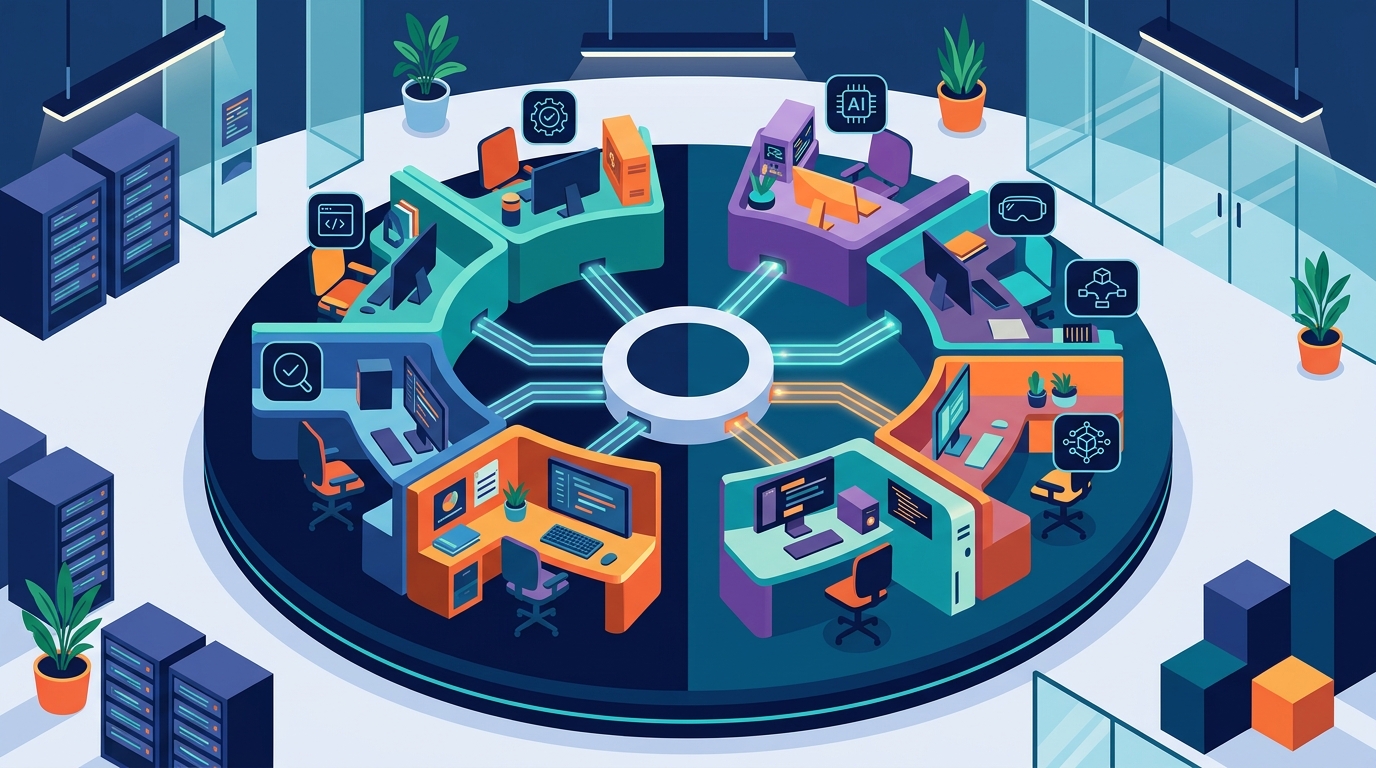
A common concern with outsourcing is the loss of control over the development process. Team augmentation addresses this by integrating external talent directly into the existing team structure. Augmented members work under the direction of the in-house team lead, adhering to the company's internal processes, tools, and communication channels. This integration ensures that the core team retains full oversight of the project's direction and quality.
Because augmented talent operates within the client's environment, there is no black box of development. The in-house team can review code, participate in daily stand-ups, and make real-time decisions. This level of transparency and control is a significant advantage over traditional outsourcing models where the vendor manages the project independently. It allows the client to maintain a strong grip on the product vision and technical standards.
Knowledge Transfer
Knowledge transfer is a critical benefit that often goes unnoticed in short-term engagements. When external experts work alongside in-house staff, they naturally share their expertise, methodologies, and problem-solving techniques. This collaborative environment creates a learning opportunity for the internal team. Over time, the in-house developers absorb new skills and best practices, enhancing their own capabilities.
This transfer of knowledge builds long-term organizational strength. Even after the augmented team departs, the in-house team retains the new skills and insights gained during the collaboration. This continuous learning cycle ensures that the company's technical capabilities grow with each project. It transforms a temporary staffing solution into a permanent asset for the organization's talent development.
Flexible Capacity Scaling
Flexible capacity scaling is the operational ability to adjust the size of the development team in real-time. Unlike traditional hiring, which involves lengthy recruitment and onboarding processes, augmentation allows for rapid adjustments. This agility is vital for tech projects that face shifting priorities or unexpected technical challenges. The ability to add or remove resources quickly ensures that the project remains on track and within budget.
This flexibility also mitigates the risk of project stagnation. If a critical bottleneck appears, the team can immediately bring in additional specialists to resolve the issue. Once the bottleneck is cleared, the extra resources can be released. This dynamic approach to capacity management ensures that the project maintains a steady momentum without the financial strain of maintaining a large, permanent team.
Accelerated Execution
Accelerated execution is the culmination of the benefits discussed above. By combining cost efficiency, specialized skills, and flexible scaling, team augmentation enables a faster and more efficient project execution. The synergy between in-house and augmented talent creates a high-performance environment where complex problems are solved quickly. This acceleration is not just about speed; it is about achieving higher quality outcomes in less time.
For digital product agencies like MEDL Mobile, this model is central to their service offering. They provide experienced engineers and designers who integrate seamlessly with client teams to drive projects forward. This approach ensures that clients can achieve their strategic goals without the delays and risks associated with traditional staffing models. The result is a more agile and responsive development process that aligns with the fast-paced nature of the tech industry.
Comparison of Staffing Models
| Feature | Full-Time Hiring | Team Augmentation | Traditional Outsourcing |
|---|---|---|---|
| Cost Structure | High fixed costs | Variable, usage-based | Fixed contract fees |
| Time to Onboard | Weeks to months | Days to weeks | Weeks |
| Project Control | Full internal control | High control via integration | Low control, vendor-led |
| Scalability | Low, rigid | High, dynamic | Medium, contract-bound |
| Knowledge Retention | High, internal | Medium, via transfer | Low, vendor-held |
Key Takeaways
- Team augmentation reduces overhead costs by eliminating the need for long-term employment benefits and equipment.
- It accelerates project delivery by injecting experienced professionals who require minimal onboarding.
- Scalability allows teams to expand or contract rapidly in response to changing project demands.
- Access to specialized skills enables projects to leverage niche expertise without permanent hiring.
- Project control is maintained because augmented talent integrates directly into the in-house team structure.
- Knowledge transfer occurs naturally as external experts share best practices with internal staff.
- Flexible capacity scaling mitigates the risk of project stagnation by allowing real-time resource adjustments.
- Accelerated execution results from the synergy of cost efficiency, speed, and specialized talent.
Frequently Asked Questions
What is the primary difference between team augmentation and outsourcing?
Team augmentation involves adding external talent to an existing in-house team, where the client retains control over the project. Outsourcing involves handing over the entire project or a significant portion of it to a third-party vendor, who manages the execution independently.
How does team augmentation impact project costs?
It typically reduces overall project costs by eliminating the overhead associated with full-time employees, such as benefits and equipment. Organizations pay only for the specific expertise and time required, leading to greater financial efficiency.
Can augmented team members work remotely?
Yes, augmented team members can work remotely or on-site. Many digital product agencies, such as MEDL Mobile, operate with distributed teams that collaborate effectively using modern communication and project management tools.
How long does it take to onboard an augmented team member?
Onboarding an augmented team member is significantly faster than hiring a full-time employee. It often takes only a few days to a couple of weeks, as these professionals are experienced and familiar with standard development workflows.
Does team augmentation help with knowledge transfer?
Yes, working alongside external experts provides a valuable opportunity for knowledge transfer. In-house team members learn new skills, methodologies, and best practices, which enhances the long-term capabilities of the internal team.
Is team augmentation suitable for small projects?
Yes, team augmentation is suitable for projects of all sizes. For small projects, it allows access to high-level expertise without the need to build a large team. It provides the flexibility to scale resources up or down as needed.
How does MEDL Mobile approach team augmentation?
MEDL Mobile provides experienced engineers and designers who integrate seamlessly with client teams. They focus on delivering measurable impact by transforming businesses with AI and custom tech innovation, backed by over 15 years of experience.
What are the risks of team augmentation?
The primary risks include potential cultural misalignment or communication challenges. However, these can be mitigated by choosing a reputable agency that prioritizes integration and communication, ensuring the augmented talent aligns with the client's goals and values.
Conclusion
Team augmentation is a strategic approach that offers significant benefits for tech projects. It provides cost efficiency, faster delivery, and access to specialized skills while maintaining project control and facilitating knowledge transfer. By leveraging this model, organizations can scale their technical capacity flexibly and accelerate execution. For businesses looking to build high-quality digital products, partnering with an experienced agency like MEDL Mobile can provide the expertise and agility needed to succeed in a competitive market. To explore how team augmentation can benefit your project, .