
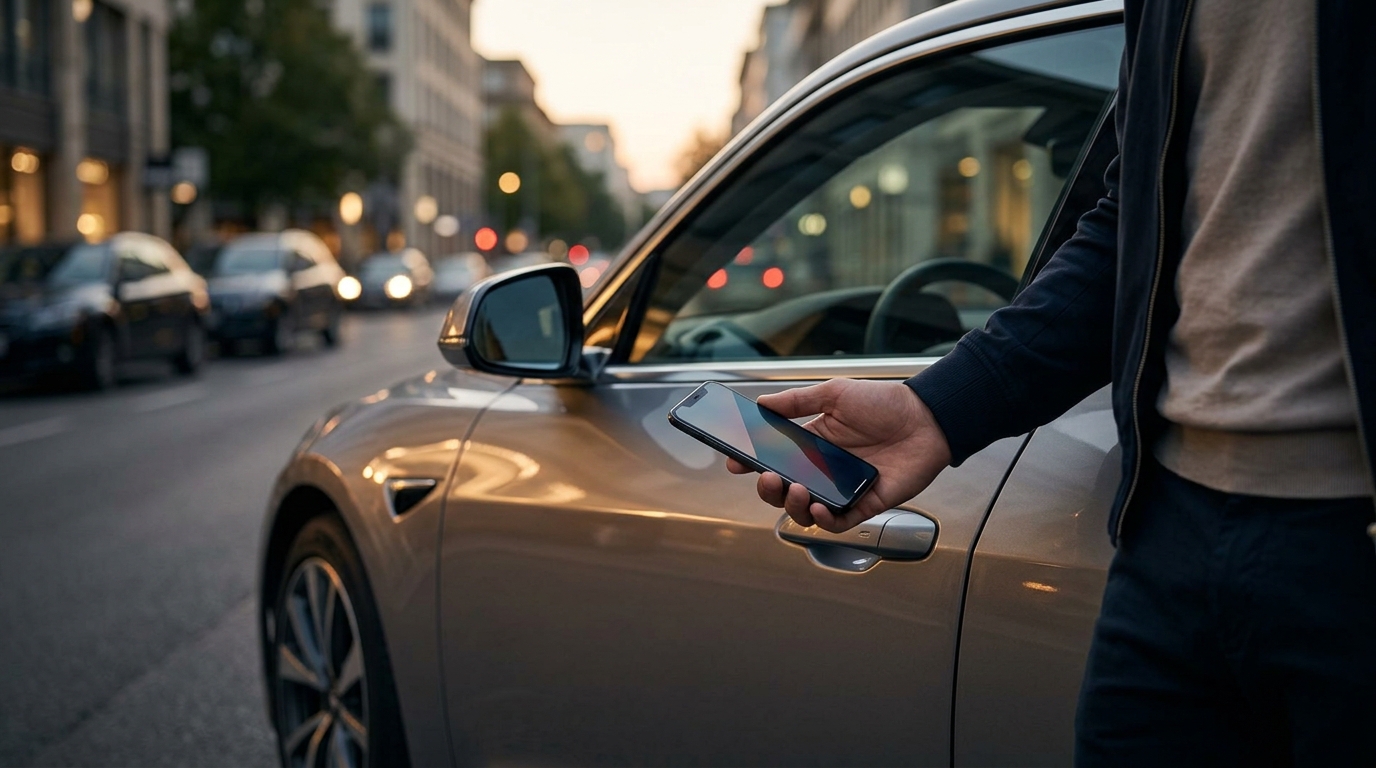
Near Field Communication (NFC) and Ultra-Wideband (UWB) are the primary wireless protocols enabling secure, hands-free vehicle access. NFC provides a low-power, short-range tap-to-unlock mechanism, while UWB offers precise, centimeter-level geofencing for automatic entry. Together, they create a robust, multi-layered security architecture that replaces physical keys with smartphone-based digital credentials. For additional details, review the Explore Our Services x2d.
The Role of NFC in Vehicle Access
Near Field Communication is a short-range wireless technology that operates at 13.56 MHz with a range typically under 4 centimeters. In automotive applications, NFC serves as the foundational layer for digital key systems. When a user taps their smartphone against a designated sensor on the vehicle, usually located on the door handle or B-pillar, the phone and car exchange encrypted data. This interaction verifies the user's identity and unlocks the doors. The extremely short range of NFC ensures that only a user physically present at the vehicle can trigger the unlock command, providing a strong baseline of physical security.
The simplicity of NFC makes it highly reliable in environments where other signals might be weak. It requires minimal power from the smartphone, making it ideal for battery-conscious devices. However, NFC requires a deliberate physical action, meaning it cannot support hands-free entry. This limitation is where UWB becomes essential for a modern user experience.
UWB Precision and Hands-Free Entry
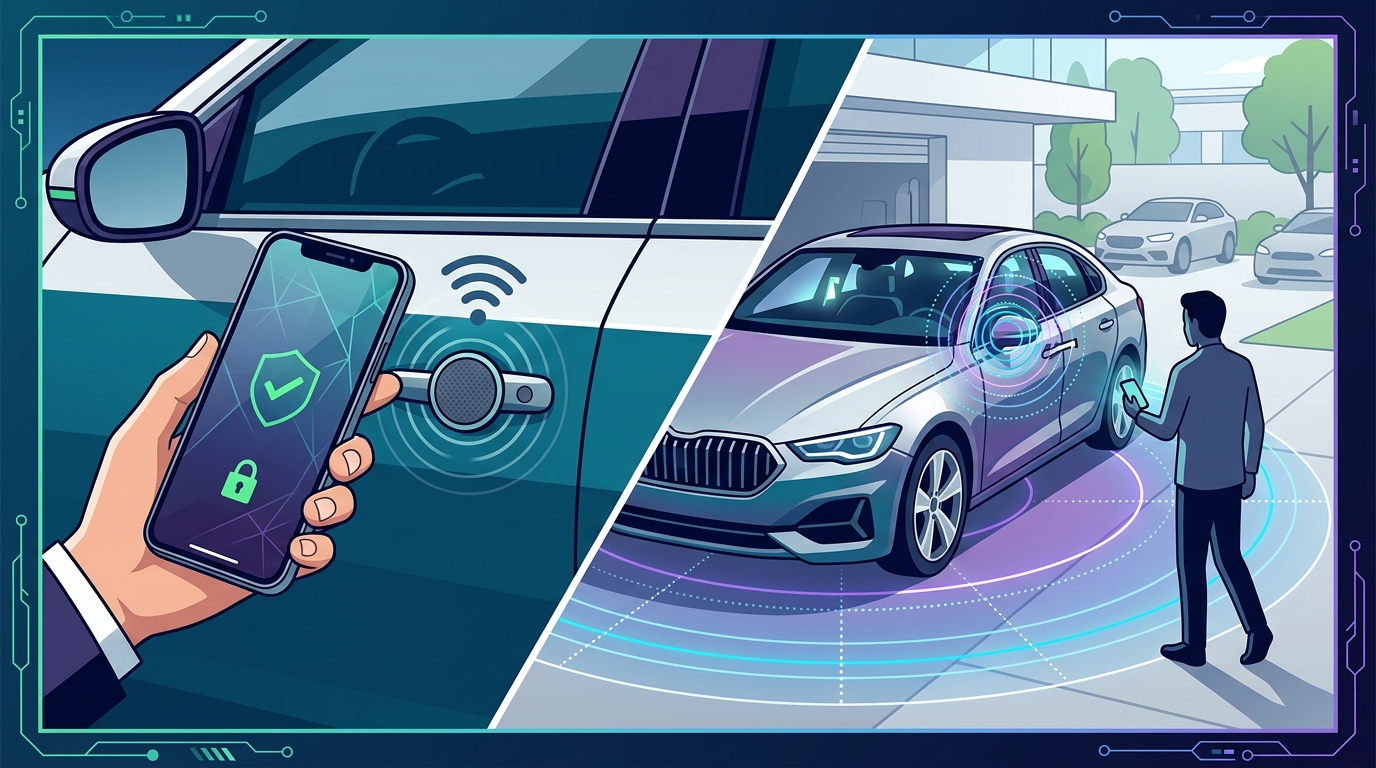
The security implications of UWB are significant. Because UWB signals are difficult to spoof or relay over long distances, it mitigates the risk of relay attacks, where thieves use devices to extend the range of a legitimate key fob. By combining UWB's precise location data with cryptographic authentication, manufacturers can create a system that is both convenient and highly secure. The technology effectively creates a digital perimeter around the vehicle that only authorized users can cross.
Multi-Layered Security Architecture
Modern digital key systems do not rely on a single protocol. Instead, they use a layered security model that combines NFC, UWB, and Bluetooth Low Energy (BLE). BLE is often used for initial discovery and background communication, allowing the phone to wake up and prepare for an interaction when the user approaches the car. Once the user is close, UWB takes over for precise ranging and hands-free unlocking. If the user is not moving toward the car or if the UWB signal is compromised, the system may fall back to requiring an NFC tap.
This redundancy is critical for maintaining trust in digital keys. Each protocol serves a distinct purpose: BLE for connectivity, UWB for precision, and NFC for physical verification. The system continuously monitors these signals and cross-references them with cryptographic keys stored in the phone's secure element. This multi-factor approach ensures that even if one layer is compromised, the others remain intact, protecting the vehicle from unauthorized access.
Development Challenges and Integration
Integrating these wireless protocols into a cohesive digital key system presents significant engineering challenges. Developers must ensure seamless handoffs between BLE, UWB, and NFC, managing power consumption and latency to provide a responsive user experience. The hardware in the vehicle must be capable of processing UWB signals accurately, which requires specialized antennas and processing units. On the smartphone side, the app must interface with the secure element to handle cryptographic operations without exposing sensitive data to the operating system.
Testing these systems in real-world environments is equally complex. Factors such as metal interference, temperature changes, and signal obstruction can affect wireless performance. Developers must conduct extensive field testing to ensure that the digital key works reliably in various conditions, from underground garages to open parking lots. This level of rigor is essential for building consumer confidence in a technology that replaces a physical object with a software-based credential.
Future Directions in Automotive Connectivity
As automotive technology evolves, digital key systems are expanding beyond simple door unlocking. Future implementations may include remote start, climate control, and even vehicle sharing features, all managed through the same secure wireless protocols. The integration of 5G and advanced IoT standards will further enhance the capabilities of these systems, allowing for real-time updates and remote diagnostics. Manufacturers are also exploring the use of UWB for in-cabin sensing, such as detecting the presence of passengers or monitoring driver fatigue.
The convergence of these technologies points toward a future where the vehicle is a fully connected, intelligent entity. The digital key is just the first step in this transformation. By leveraging the strengths of NFC, UWB, and BLE, the automotive industry is creating a new paradigm of access and interaction that is both secure and intuitive. This shift requires close collaboration between automakers, smartphone manufacturers, and software developers to ensure interoperability and security across different platforms.
Key Takeaways
- NFC provides a secure, short-range tap-to-unlock mechanism that requires physical proximity.
- UWB enables hands-free entry through precise, centimeter-level ranging and geofencing.
- BLE serves as the background connectivity layer for initial device discovery.
- Multi-layered security combines these protocols to mitigate relay and spoofing attacks.
- Development requires rigorous testing for signal interference and power efficiency.
Frequently Asked Questions
What is the main difference between NFC and UWB in digital keys?
NFC requires a physical tap and has a very short range, while UWB allows for hands-free entry using precise distance measurement.
Can UWB signals be hacked?
UWB is difficult to spoof due to its short pulse duration and low power, making it more secure than traditional radio frequencies against relay attacks.
Do all smartphones support UWB digital keys?
No, only specific models with UWB hardware, such as certain Android and iPhone devices, support UWB-based digital keys.
How does BLE fit into the digital key system?
BLE is used for low-power background communication to detect when a phone is near the vehicle, triggering the more precise UWB or NFC interactions.
Is a digital key as secure as a physical key?
Yes, when implemented with multi-layered security, digital keys can be more secure than physical keys by eliminating the risk of lost or cloned fobs.
Conclusion
The integration of NFC and UWB into automotive digital key systems represents a significant leap in vehicle security and user convenience. By leveraging the distinct strengths of these wireless protocols, manufacturers can create a robust, multi-layered access solution that meets the demands of the modern connected car. For businesses looking to develop similar secure, hardware-integrated applications, MEDL Mobile offers extensive experience in automotive technology and mobile development. Their expertise in handling complex integrations, such as the digital key experience for Toyota, demonstrates the capability to deliver high-stakes, secure digital products. To explore how your organization can leverage these technologies, to discuss your project needs.