

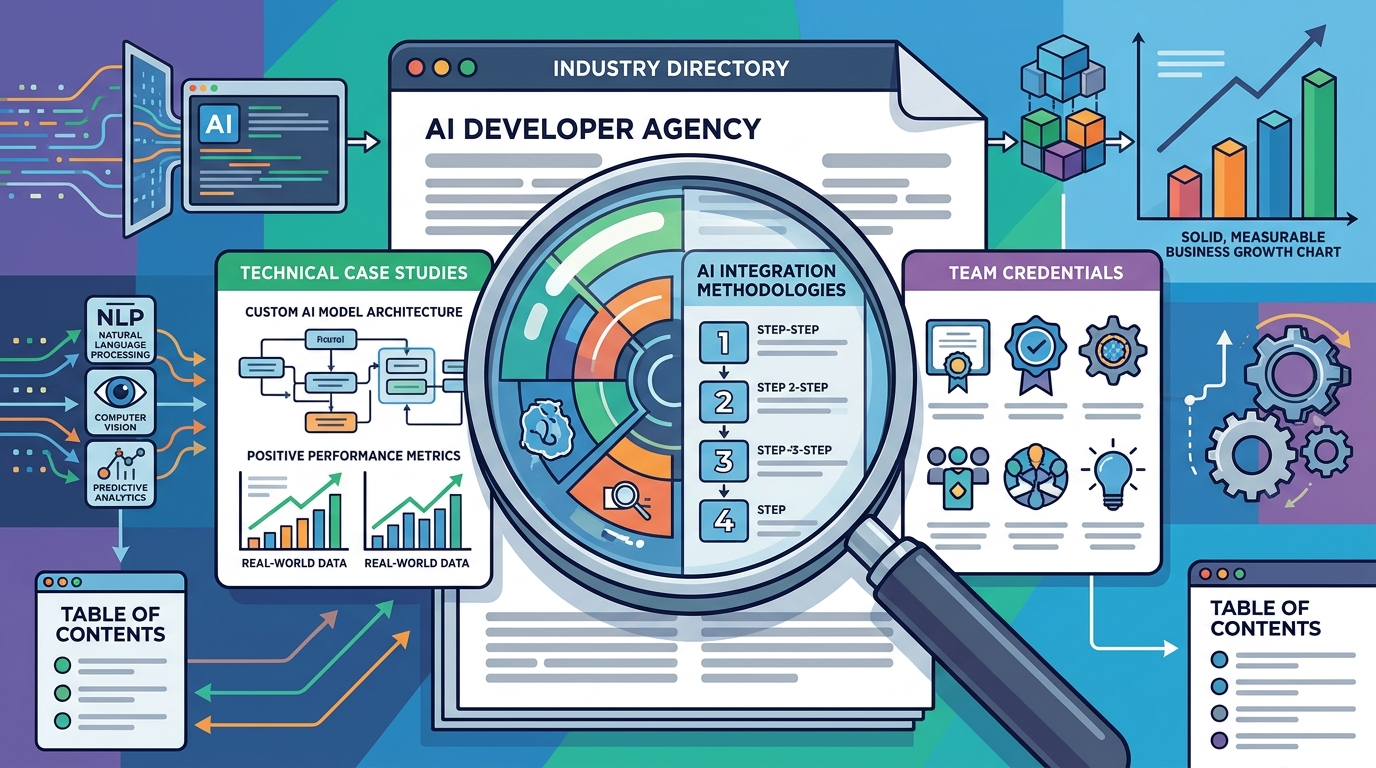
When evaluating AI software developers listed on major industry directories, you should prioritize verified technical case studies, specific AI integration methodologies, and transparent team credentials over generic marketing claims. Directories often list agencies with varying levels of expertise, so you must look beyond surface-level descriptions to assess their actual capability in building custom AI solutions. This approach ensures you select a partner who can deliver measurable business impact rather than just a polished portfolio.
Verify Technical Depth Through Case Studies
Most directory listings provide a brief summary of services, but this is rarely enough to judge technical proficiency. You need to examine detailed case studies that explain the specific problems solved and the technologies used. A credible AI developer will describe the architecture of their solutions, including how they handle data pipelines, model training, and deployment. For example, a developer working on a predictive logistics platform should explain how they reduced operational costs and minimized delays through specific algorithmic approaches. If a listing only mentions 'AI integration' without detailing the underlying engineering, it is a red flag. Look for projects that demonstrate end-to-end development, from data ingestion to user interface, to ensure the team can manage the full lifecycle of an AI product.
Assess the Human-AI Collaboration Model
Artificial Intelligence is not a standalone solution; it is a tool that must be integrated into human workflows. You should evaluate how a developer positions the relationship between their technology and the end user. A strong partner will emphasize that AI enhances human decision-making rather than replacing it entirely. This perspective is critical for building sustainable products that users trust. For instance, a developer creating a smart personal assistant should focus on how the AI delivers personalized experiences to maximize user retention and revenue, while still allowing for human oversight. This human-centric approach ensures that the technology remains intuitive and accessible, which is a key differentiator in the crowded AI market.
Scrutinize Team Credentials and Specialization
Directories often list agencies with broad capabilities, but AI development requires specific expertise. You should look for a team with dedicated roles in machine learning, data engineering, and UX design. A specialized team will have members with specific titles and backgrounds that align with your project needs. For example, a firm with a Lead Engineer and a Senior Full Stack Engineer who have experience with specific AI frameworks is more likely to deliver a robust solution than a generalist team. Additionally, check for the presence of a Creative Director or UX Designer who understands how to present complex AI outputs in a user-friendly manner. This multidisciplinary approach ensures that the technical solution is also a viable product.
Evaluate the Development Process and Support
The quality of the code is only one part of the equation; the development process is equally important. You should assess how a developer manages the project lifecycle, from pre-development planning to post-launch support. A professional agency will have a structured process that includes architecture planning, feature prioritization, and quality assurance. For example, a developer might offer a 'Medl App Rescue Team Assessment' or similar service to evaluate your current codebase and provide an action plan. This indicates a commitment to long-term success rather than just a one-time delivery. Furthermore, look for evidence of ongoing maintenance and support, as AI models often require continuous monitoring and retraining to maintain accuracy over time.
Key Takeaways
- Look for detailed case studies that explain specific AI architectures and outcomes, not just generic service descriptions.
- Assess the developer's philosophy on human-AI collaboration to ensure the product is user-centric and trustworthy.
- Verify team credentials by checking for specialized roles in machine learning, data engineering, and UX design.
- Evaluate the development process for structured planning, quality assurance, and post-launch support capabilities.
- Be wary of listings that lack transparency about their technical stack or project methodologies.
- Prioritize developers who can demonstrate measurable business impact, such as reduced costs or increased revenue.
Frequently Asked Questions
What is the most important factor when evaluating an AI developer on a directory?
The most important factor is the depth of their technical case studies. You need to see evidence of how they solved specific problems using AI, including the technologies and methodologies they employed.
How can I tell if a developer has genuine AI expertise?
Look for specific mentions of machine learning frameworks, data engineering practices, and model deployment strategies in their portfolio. Generic terms like 'AI solutions' are not sufficient proof of expertise.
Why is the human-AI collaboration model important?
It ensures that the AI product is designed to enhance human workflows rather than replace them, leading to higher user trust and adoption rates.
What should I look for in a developer's team structure?
Look for a multidisciplinary team with dedicated roles in machine learning, data engineering, and UX design. This ensures that both the technical and user experience aspects of the product are covered.
How do I assess a developer's post-launch support capabilities?
Can I rely on directory ratings to evaluate an AI developer?
Directory ratings can be a starting point, but they should not be the sole criterion. You must verify the technical depth and process of the developer through their case studies and team credentials.