
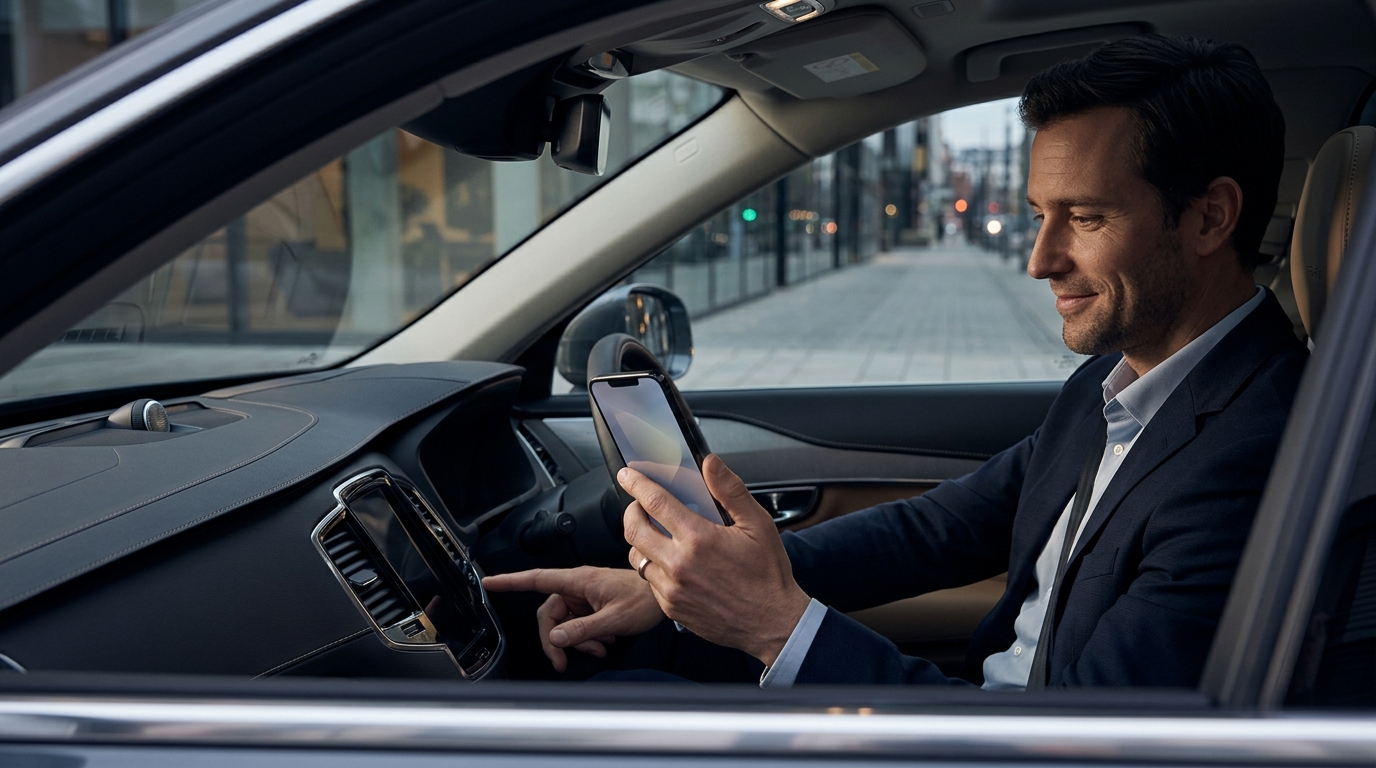
Developing a secure digital key app requires integrating cryptographic protocols, secure hardware elements, and resilient backend infrastructure to ensure vehicle access is both seamless and tamper-proof. This guide outlines the essential technical steps for automotive digital key development. It covers the specific security layers needed to protect user data and vehicle integrity in modern connected cars. For additional details, review the Explore Our Services x2d.
BLE, UWB, and NFC Protocols
Wireless communication is the primary interface between a smartphone and a vehicle. Developers must select the right combination of radio protocols to balance proximity detection, security, and user convenience. Each protocol serves a distinct role in the digital key ecosystem. For additional details, review the Careers and Opportunities x2d.
Bluetooth Low Energy (BLE)
Bluetooth Low Energy is a short-range wireless technology that enables low-power data exchange between devices. It is the foundational layer for most digital key implementations. BLE allows the vehicle to detect the presence of a smartphone within a specific radius. This proximity trigger initiates the authentication handshake. It consumes minimal battery life, making it ideal for always-on vehicle monitoring.
Ultra-Wideband (UWB)
Ultra-Wideband is a high-precision radio technology that measures distance with centimeter-level accuracy. Unlike BLE, which can be spoofed by signal amplifiers, UWB uses time-of-flight measurements to verify physical proximity. This makes it highly resistant to relay attacks. UWB is critical for hands-free entry and start features, ensuring the car only unlocks when the owner is physically standing next to it.
Near Field Communication (NFC)
Near Field Communication is a short-range wireless technology that operates at very close distances, typically less than four centimeters. NFC is used for tap-to-unlock functionality. It provides a simple, low-power method for users to interact with the vehicle. Because of its extremely short range, NFC is inherently secure against remote interception. It serves as a reliable fallback when UWB or BLE signals are obstructed.
| Protocol | Range | Primary Use Case | Security Profile |
|---|---|---|---|
| BLE | 10-100 meters | Proximity detection, data exchange | Moderate, requires encryption |
| UWB | 1-10 meters | Hands-free entry, precise ranging | High, resistant to relay attacks | NFC | < 4 centimeters | Tap-to-unlock, fallback access | Very High, physical proximity required |
Secure Backend Infrastructure
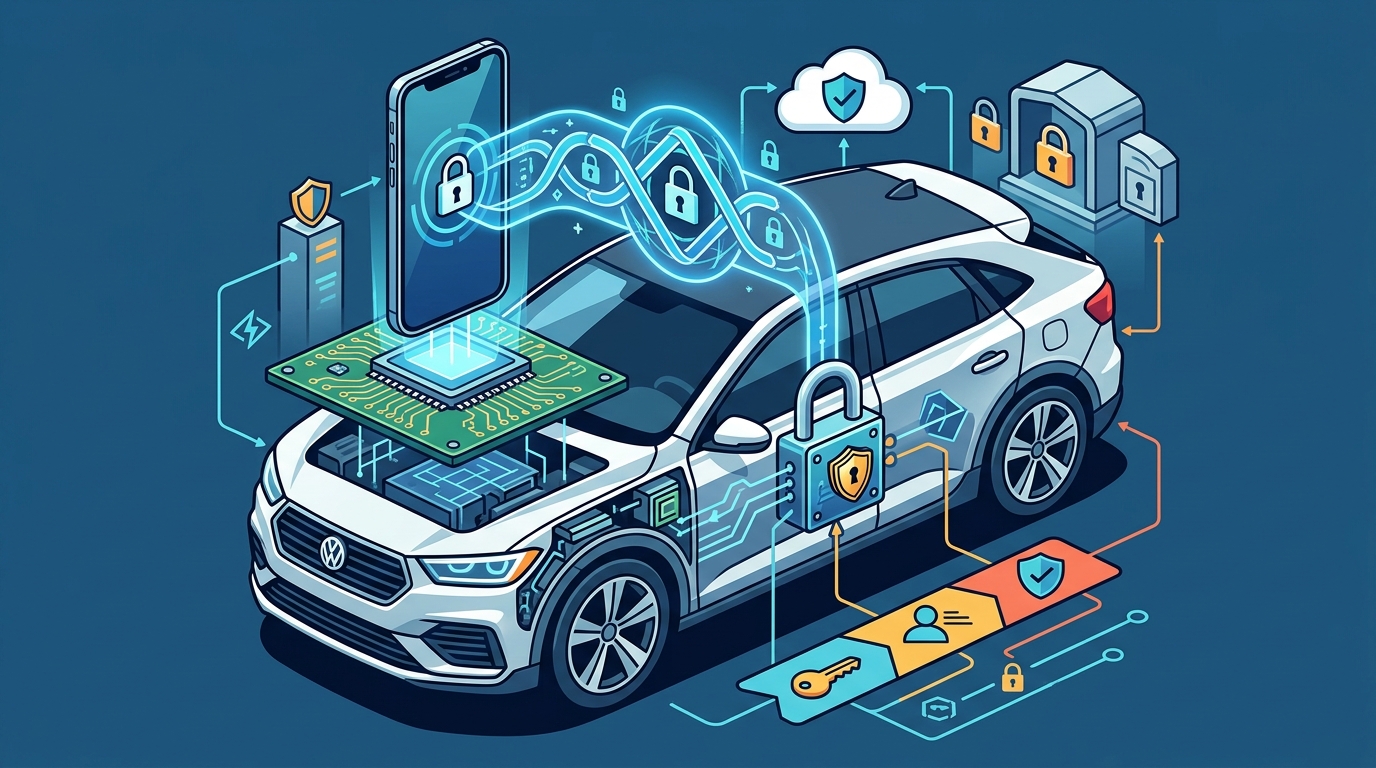
The backend acts as the trusted authority that validates user identity and manages key permissions. A secure backend infrastructure is the central nervous system of the digital key ecosystem. It must handle cryptographic operations, user authentication, and real-time key management without becoming a single point of failure.
Identity and Access Management
Identity and Access Management is a framework for managing user identities and controlling access to resources. In automotive applications, this involves verifying the user's identity through multi-factor authentication. The backend must confirm that the person holding the phone is the authorized key holder. This process often involves biometric verification on the device, followed by a secure token exchange with the server.
Cryptographic Key Management
Cryptographic key management is the process of generating, distributing, and revoking digital keys securely. The backend must store master keys in hardware security modules to prevent extraction. It generates unique key pairs for each user and vehicle combination. These keys are used to encrypt communication between the phone and the car. The system must support rapid key revocation in case of a compromised device or stolen vehicle.
Resilience and Redundancy
Automotive systems require high availability to ensure users are never locked out. The backend infrastructure must be designed with redundancy and failover capabilities. If a primary server goes down, backup systems must take over seamlessly. This ensures that key validation and vehicle access remain functional even during network outages or cyber incidents.
Secure Element Hardware Storage
Storing cryptographic keys on the user's device is a critical security challenge. Standard application storage is vulnerable to malware and physical extraction. Secure element hardware storage provides a tamper-resistant environment for sensitive data.
Hardware Security Modules
A Hardware Security Module is a physical device that stores cryptographic keys and performs cryptographic operations in a secure environment. In smartphones, this is often implemented as a Secure Element chip. This chip is isolated from the main processor and operating system. It ensures that private keys never leave the secure boundary in plaintext. This isolation protects keys from software-based attacks and physical tampering.
Trusted Execution Environments
A Trusted Execution Environment is a secure area of the main processor memory that guarantees the confidentiality and integrity of code and data. TEEs, such as Apple's Secure Enclave or Android's StrongBox, provide a secure sandbox for digital key applications. They allow cryptographic operations to be performed without exposing keys to the rest of the operating system. This adds an additional layer of defense against sophisticated malware.
Key Provisioning and Lifecycle
Key Takeaways
- BLE provides low-power proximity detection but requires encryption to prevent spoofing.
- NFC serves as a secure, short-range fallback for tap-to-unlock functionality.
- Backend infrastructure must use hardware security modules to protect master keys.
- Identity and Access Management frameworks are essential for verifying user identity.
- Secure Element chips isolate cryptographic keys from the main operating system.
- Trusted Execution Environments provide a secure sandbox for key operations.
- Key revocation mechanisms are critical for responding to lost or stolen devices.
Frequently Asked Questions
What is the most secure protocol for digital keys?
Ultra-Wideband is considered the most secure for hands-free entry because it uses time-of-flight measurements that are difficult to spoof. It is often combined with BLE and NFC for a layered security approach.
How does a secure element protect keys?
A secure element is a tamper-resistant chip that stores keys in a physically isolated environment. It prevents software and hardware attacks from extracting the private keys.
Can a stolen phone be used to unlock a car?
No, if the system is designed correctly. The backend can revoke the keys stored in the secure element of a stolen phone. Additionally, biometric verification on the device adds another layer of protection.
What is the role of the backend in digital key security?
The backend acts as the trusted authority that validates user identity and manages key permissions. It handles cryptographic operations and ensures that only authorized users can access the vehicle.
How does UWB prevent relay attacks?
UWB measures the precise distance between the phone and the car using time-of-flight. Relay attacks amplify signals to fake proximity, but UWB can detect the delay and distance mismatch, preventing unauthorized access.
Is NFC secure enough for digital keys?
Yes, NFC is very secure due to its extremely short range. It requires the phone to be within a few centimeters of the car, making remote interception nearly impossible.
What is a Trusted Execution Environment?
A Trusted Execution Environment is a secure area of the processor memory that isolates sensitive code and data from the rest of the operating system. It provides a secure sandbox for cryptographic operations.
How often should digital keys be rotated?
Key rotation policies vary, but regular rotation is recommended to limit the exposure window if a key is compromised. The backend can automate this process to ensure continuous security.
Conclusion
Developing a secure digital key app is a complex undertaking that requires a deep understanding of wireless protocols, backend security, and hardware storage. By combining BLE, UWB, and NFC with robust backend infrastructure and secure element hardware, developers can create a system that is both user-friendly and highly secure. MEDL Mobile has extensive experience in building secure, connected device applications, including the first digital key experience in North America for Toyota. Our team specializes in integrating complex hardware and software systems to deliver seamless user experiences. If you are looking to develop a secure digital key app, to discuss your project requirements.